History of the Park
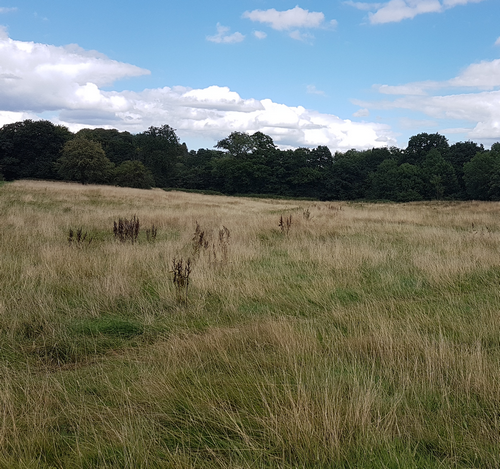 Standing in the Great Meadow and looking North, one could imagine being in medieval England, which is understandable, as areas of the park have not changed significantly since; whilst other parts have altered, reflecting the way we have utilised the land throughout the intervening centuries.
There is evidence that Neolithic tribes lived near Griffins Brook; the Romans used the nearby road going to the fort at Metchley in what is now Edgbaston. Northfield is mentioned in the Domesday Book (the book of land ownership made in 1086 after the Norman Conquest in 1066).
A doorway at St Laurence’s Church dates from 117; Weoley Castle, a 14th Century fortified manor house, had extensive estates, including a deer park, last used in the 16th century, that covered the area of the park.
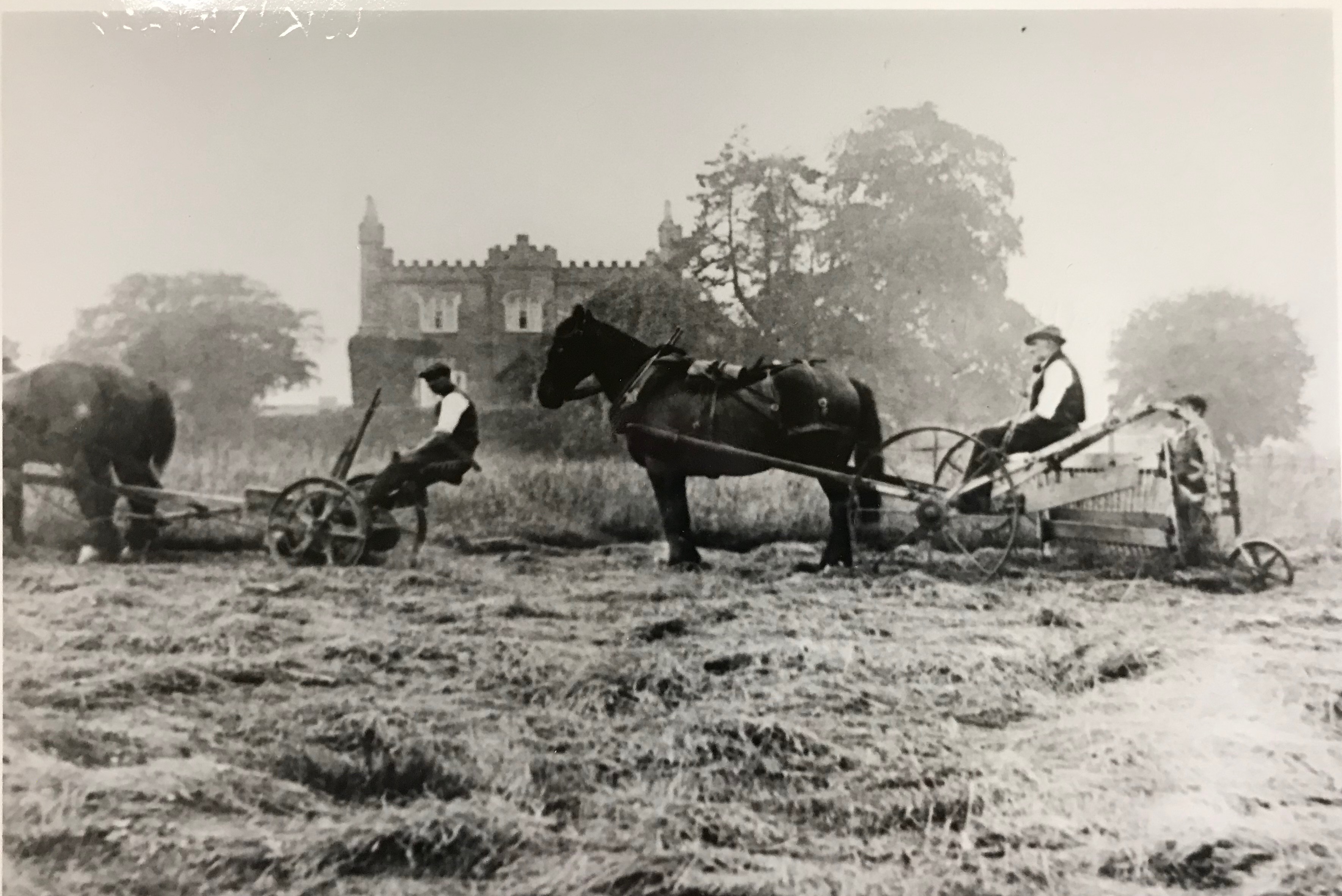
Although the land is hilly and boggy in places, farming has been the main land use until the 1960s there were several farms surrounding the Manor House, which used to be called New House Farm; Middle Park Farm, Shenley Fields Farm, Old Park Farm, Hole Farm and Whitehill Farm.
In 1824 this land was sold in three plots; in 1840 a tithe map, surveyed by the Ordnance Survey, showed the boundaries of the fields in the area. Successive maps of the area show how its owners changed the land to suit their needs.
Before the 19th century, Griffins Brook was dammed to create a lake in the Great Meadow, but only the dam appears on the 1840 Tithe map. In the early 19th century, the Brook was diverted to create two smaller fishponds, the remains of which can still be seen today. You can see ridges and furrows (small wave-like formations in the ground caused by ploughing patterns) throughout the park.
Sometime in the 1880s, the lake was created. In 1893 George and Elizabeth Cadbury bought the Manor House, moving from their home at Woodbrooke, which had become too small for their family. They built the farm buildings at the park entrance and a timber barn that would host large parties of people from the inner city and Black Country, sometimes with 700 people attending. Griffins Brook was diverted around the lake, leaving the Lovell Stream to feed it.
 Griffins Brook was developed as a paddling beach for children and there was an open-air bath in the woods nearby for use by the parties that visited. In 1922 George died and left the house and farm to his wife, but with the request that on her death the estate would become a public park. Elizabeth continued welcoming families to enjoy her house and land, about 100,000 people a year were said to have visited.
Following Elizabeth's death in 1951, the Manor Farm section of the estate was entrusted to the Birmingham City Corporation to be 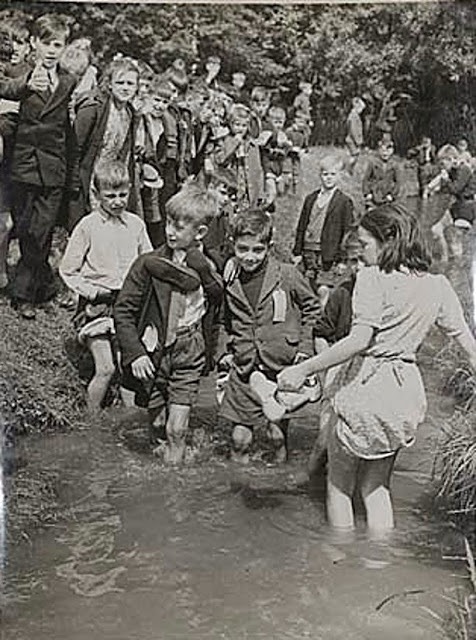 kept, "in perpetuity as a public park". Some land was swapped between the Cadbury Estate and the Corporation which, in 1954 created the present park (it opened in 1955), whilst the Manor House and gardens were sold to the University of Birmingham to become halls of residence for students.
Crest Nicholson bought the land and halls of residence from the University to build dwellings on New House Drive in 2004; the second phase around the site of the Manor House was completed in 2021. Sadly, arsonists destroyed the original House in 2014, but a replica on the site has been built and contains several flats.
The Cadbury Barn was burnt down by arsonists in 2017. 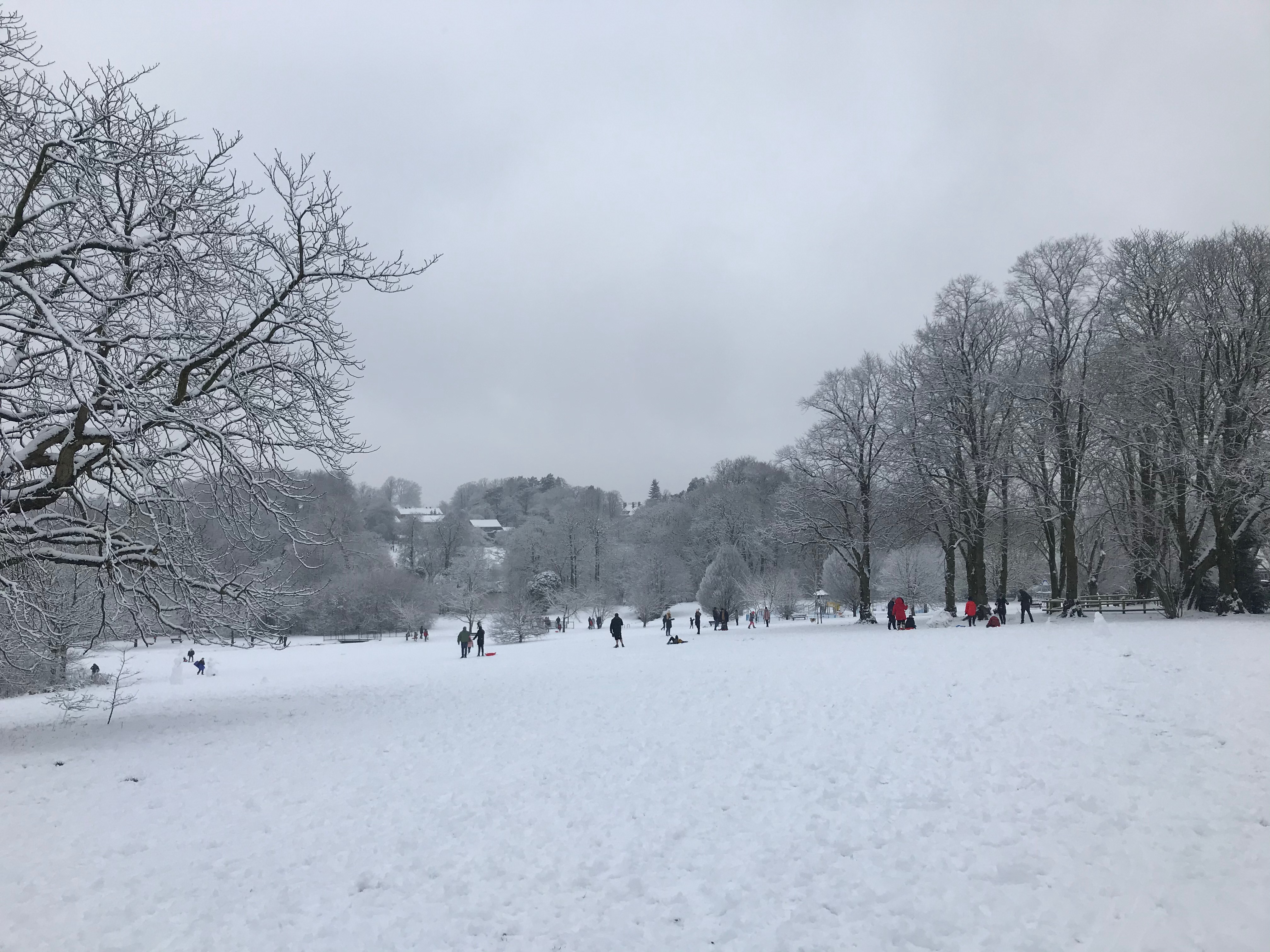 However, the park continues to change and be a place for people to meet and enjoy the outdoors, which was especially important during the final quarter of 2019, through 2020 and right up until September 2021 because of the Covid-19 virus.
In 2020, the Cadbury Barn Trust was formed with the aim of continuing the philanthropic heritage of George and Elizabeth Cadbury. They plan to provide community facilities, such as a meeting place with refreshments and toilets for use by park users. With funding and working in partnership with the Birmingham School of Bell Ringing, the Friends of Manor Farm Park and BCC, the Trust hopes to create community facilities in 2021. Click here for more park history.
Many thanks to Tony Sames, Jo Adams, Chris Rice, Alex Jones, Sue Tungate, Nina Griffiths, the late Janette Denley & Peggy Broomfield for their contribution to these articles.
See our slide show presented to the Bournville Society in 2024