Park Trees
Several areas of trees within the park have been named, some recently and others many years ago. For example, the Ancient Hedgerow is, evidentially, centuries-old but has only recently been named and the North Copse, created during the lake dredging carried out in 1985/6 was only named during the past decade; The Millennium Wood and Diamond Jubilee Orchard (planted to commemorate Queen Elizabeth the Second's Diamond Jubilee) were named when they were planted.
The Diamond Jubilee Orchard
 The trees in the orchard were planted by members of the FoMFP, volunteers from the 'Ecocentre' in Northfield and BCC Park Rangers in late 2012.
The Millennium Wood
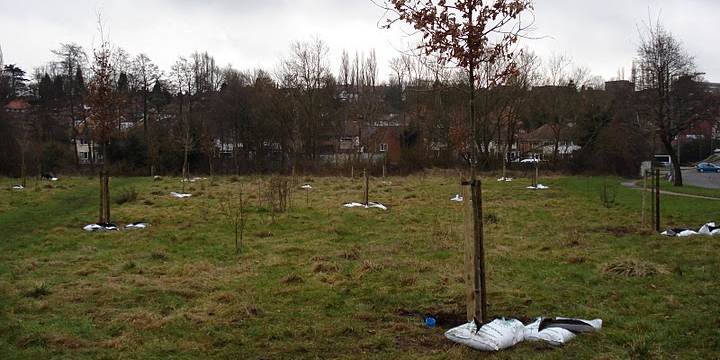 In 2000, the Millennium Wood was created at the extreme south end of the park and has a variety of species, including Common Oak, Blackthorn and Hazel.
The Spinney
The wood at the top of the slope above the lake is known as the Spinney [a small wood]. It was planted sometime between 1857 and 1882 and is also known locally as Eyemore Wood.
Ash, Horse Chestnut, Common Lime, Sycamore, Hornbeam, Oak, Elder, Wych Elm (coppice or seedling), Beech, Rowan, Turkey Oak, Black Poplar are some species of trees and shrubs growing here along with bramble, nettles, bluebells and red campion.
It is home to a great number of birds, Nuthatches, Greater Spotted Woodpeckers, Green Woodpeckers, Robins, Blackcaps, Firecrests, Tits (Coal, Blue, Great and Longtail) Crows, Jays, Magpies and Little Owls. Buzzards soar over the trees and Sparrow Hawks swoop through to take the Wood Pigeons. Bats and foxes are two of the dominant species of mammals that inhabit the Spinney.
The Plantation
Trees in and around the plantation [both sides of Griffins Brook from about half-way on the east side of the Great Meadow] were planted with the help of over 500 people in Autumn 1988. They were mulched with bark chips to help them to get established. There are oak trees with wildflowers, including Angelica and wild garlic in the area. Most trees survived but many were unable to develop due to the conditions being too dry plus competition from other plants. Click here to view the map made by Tony Sames in 1990 which gives more detail.
The North Copse
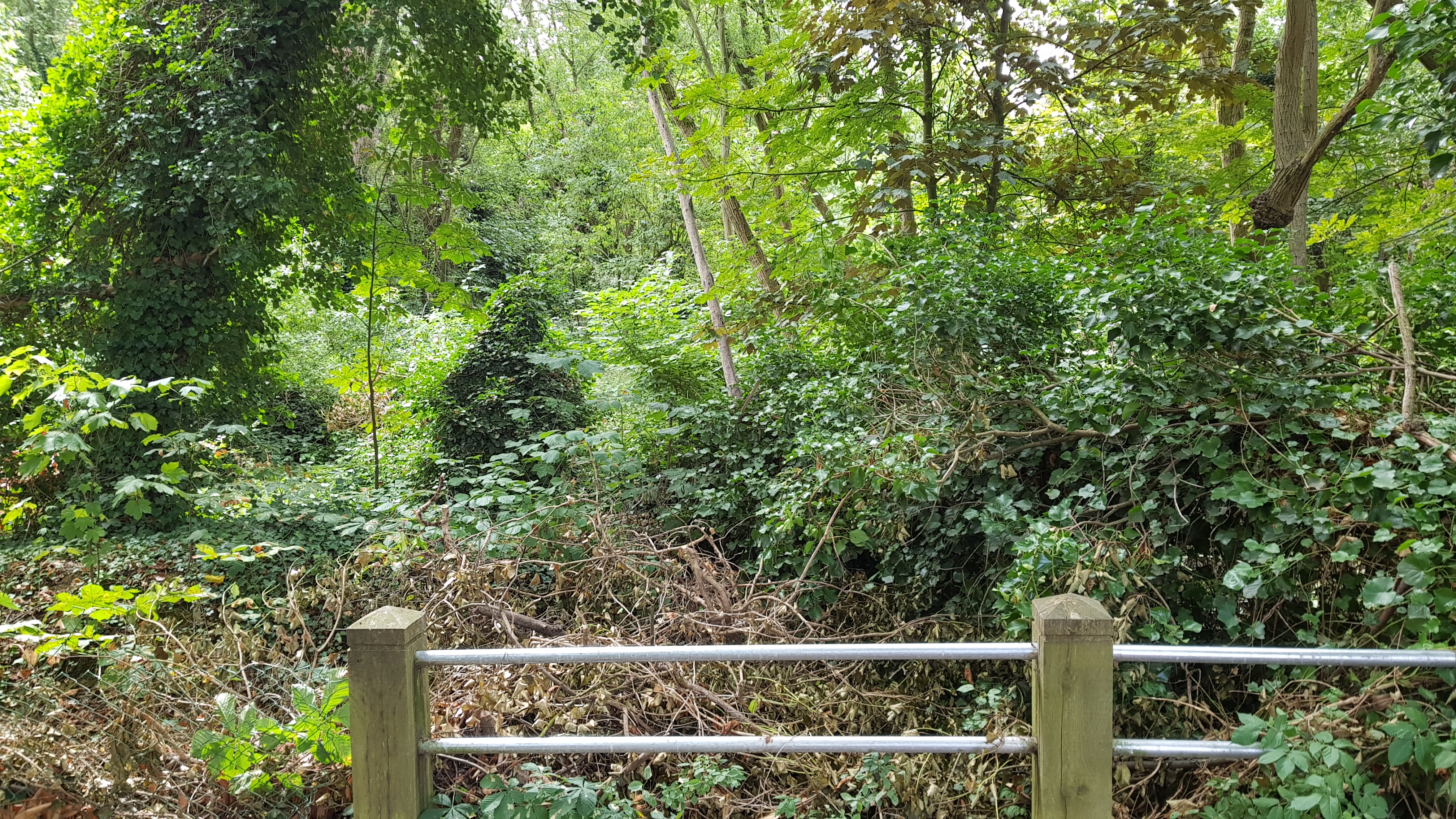 The North Copse, to the left of the Manor Drive entrance, has dense thickets of Goat Willow, Crack Willow, Sallow and Alder.
The Top Meadow
This meadow is on the eastern edge of the park adjacent to the Bristol Road, it was known as Jones Leasow in the 19th Century.
The Great Meadow
This area, like the rest of the park was farm land and before that, part of the deer park. Originally, Griffins Brook ran through the meadow with a dam where Lovell Stream comes across the meadow, to form a lake.