Cadbury Barn
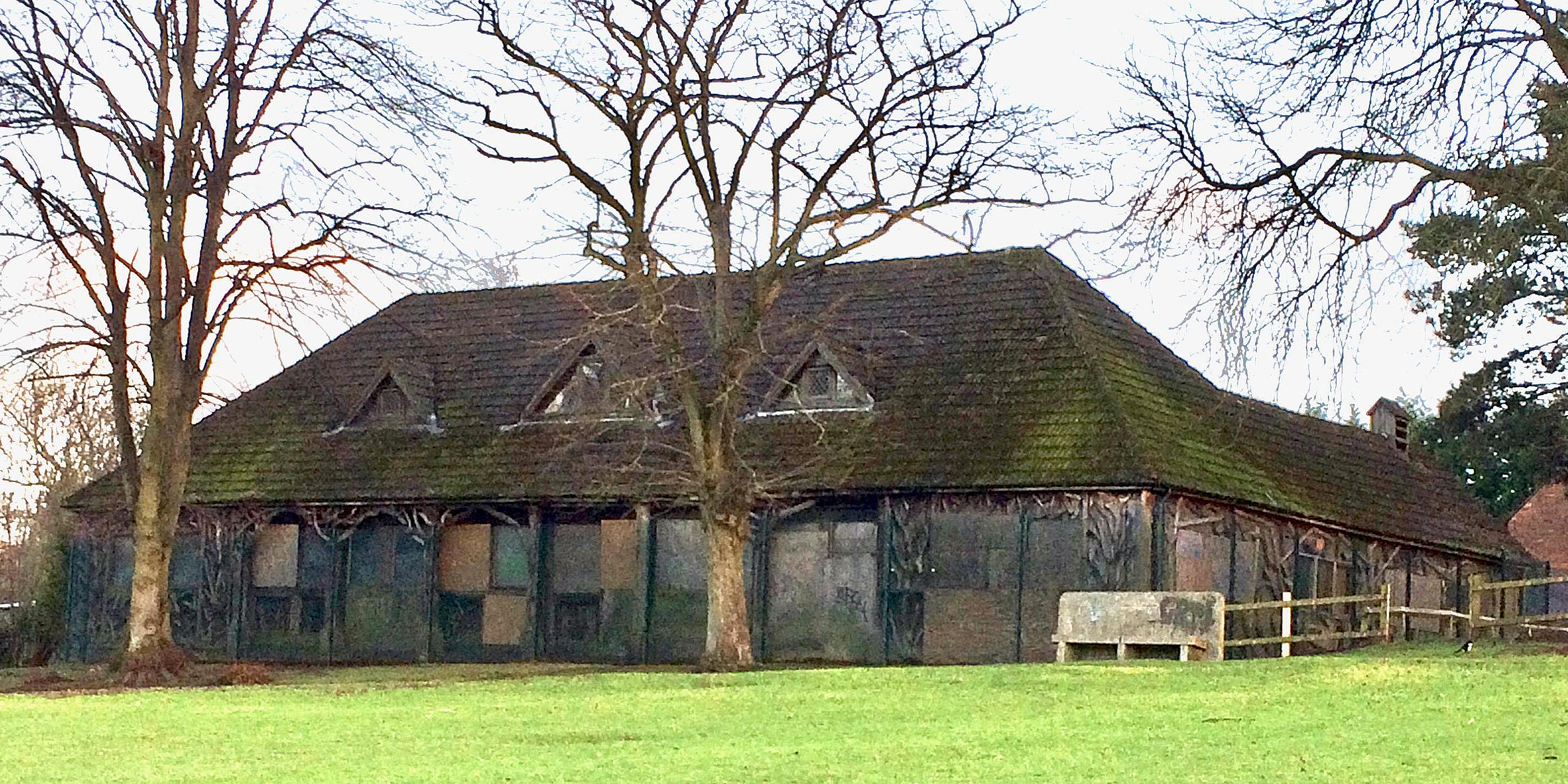
On the night of 31st July 2017, the building that was known as The Cadbury Barn was burnt down. To the casual observer, it could have been seen as just an old shed used to house park equipment, but in fact, it was a valuable part of Birmingham’s history that is now lost forever.
It was built by George Cadbury in 1895.
George and his brother, Richard, were well known local businessmen who had established Cadbury Brothers as one of the country’s leading chocolate manufacturers and, in 1879 decided to relocate their factory from the centre of Birmingham to Bournville, an area of countryside four miles out of the town (Gardiner, 1923).
This was an innovative idea that clearly demonstrated both an astute business plan and the Cadbury brothers’ paternalistic attitude to their employees. This factory would provide not only decent working conditions and recreational facilities for the employees but also affordable good housing with gardens, set in a landscape full of green spaces and trees to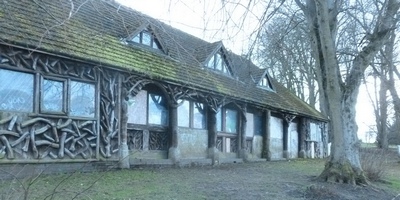 mimic living in the country. This is argued by some as a forerunner of the ‘Garden City Movement’ which was, in the future, to change the way urban living developed (Williams, 2014). The Cadbury family were staunch Quakers. They believed that their faith is something that they live rather than put into particular words’ (Gillman 1997). All people are considered equal and all can feel God’s power from within, and it is this power that directs all aspects of their lives (Gillman 1997). So in the case of George and Elizabeth, this manifested itself in their care for others both at work in teir factory and the wider world.
George’s work in the Adult Schools and Elizabeth’s concern for women’s issues and hospital work meant that they never lost touch with how the working classes lived. They knew that life in the centre of Birmingham was becoming increasingly hard as industrialisation intensified, the green spaces disappeared and the air became more polluted. The working day was long, wages were low and the Cadburys knew that inner-city families’ lives were very different from their own.
To alleviate this, if only for 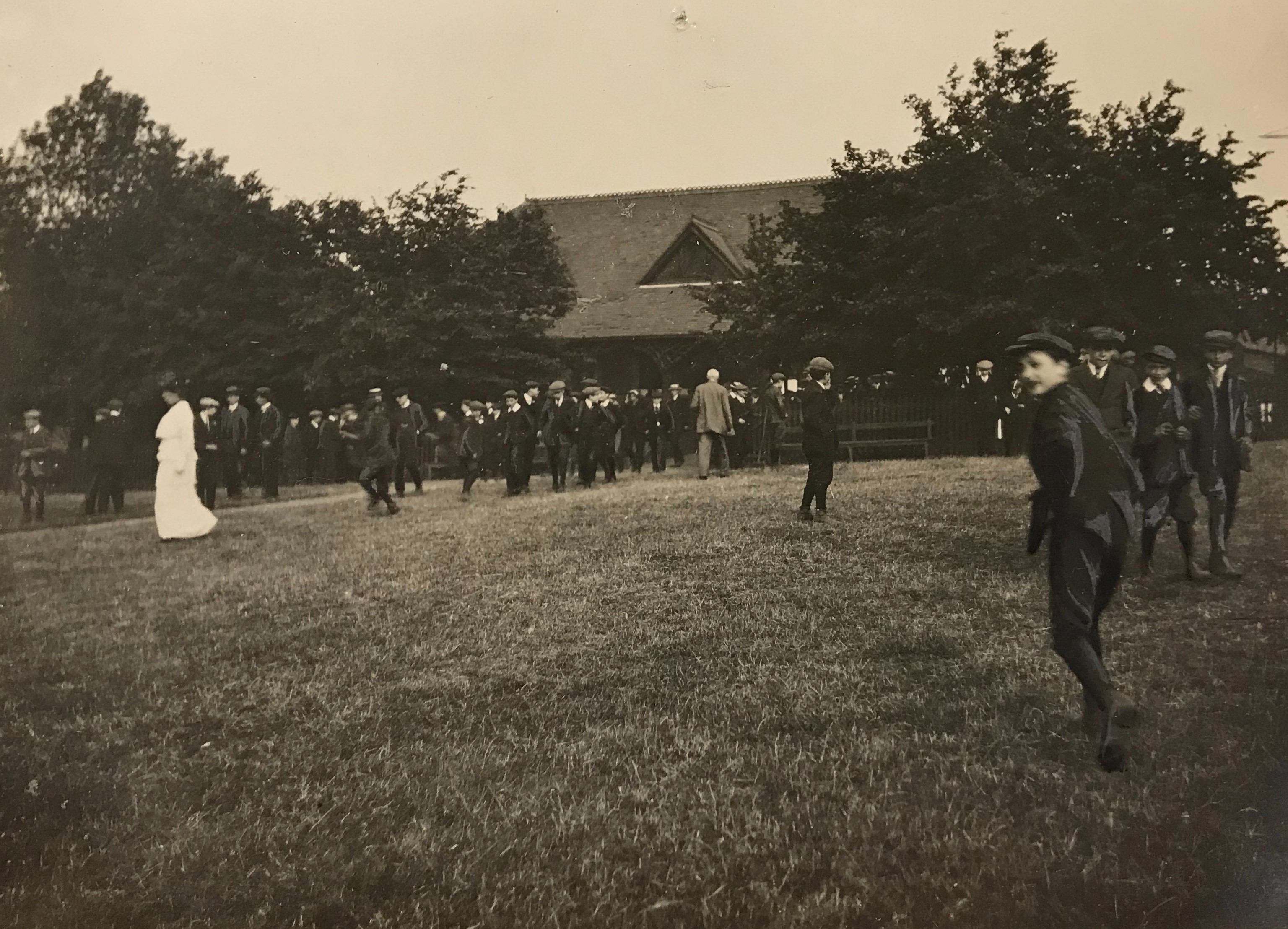 a day, they organised parties at their home. These started when they lived at Woodbrooke, a large house surrounded by woods about a mile away from the Cadbury works at Bournville: a large tent was erected in the garden and the children enjoyed playing games, eating tea and roaming through the trees. In 1894, they moved across the Bristol Road to Northfield Manor House, set in Manor Farm, where they decided to continue and expand their hospitality (Gardiner 1923, 128).
In 1895, George Cadbury applied for planning permission to erect new farm buildings to improve the efficiency of the farm. Included on these plans was a plot annotated as "the site of the future barn", that was to be used, not for the farm, but parties". An entry in Elizabeth’s personal diary on Friday 12th April, which was Good Friday, says ‘George and I decide the position of the Barn for parties‘ and later in the year, on Thursday, June 20th she writes, ‘The Stirchley School. 500 came for a splendid day, had tea very comfortably in the Barn (Elizabeth Cadbury Diary 1895). 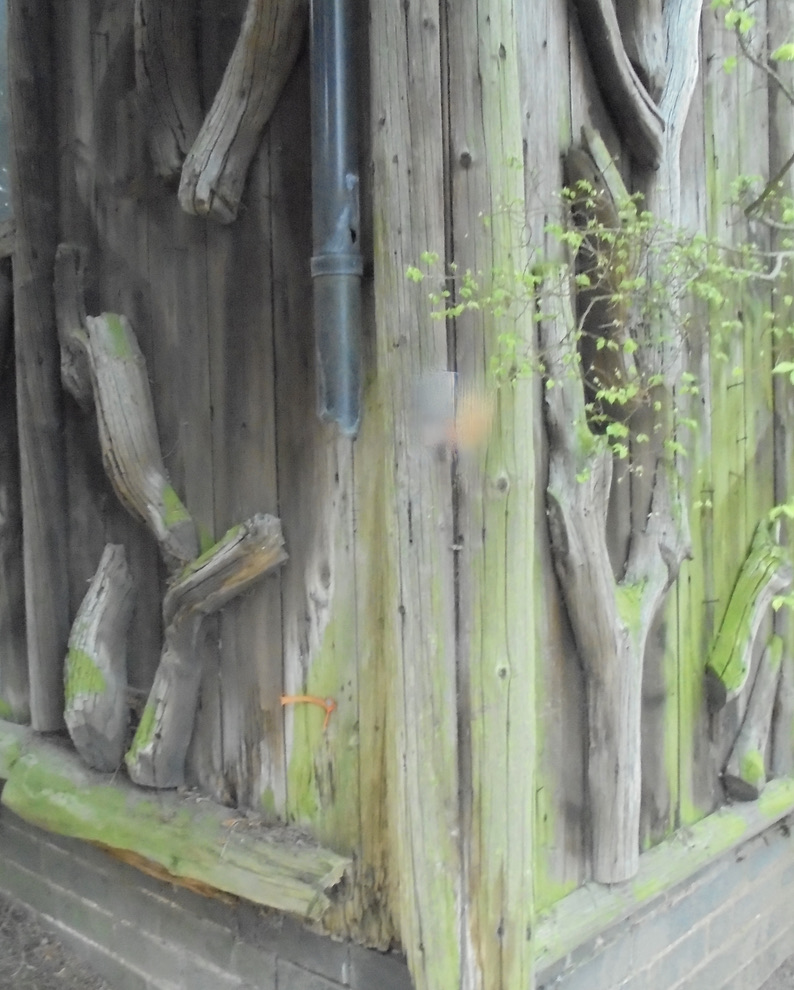 The barn was wooden and was described as a 'large rustic hall, lofty and airy,’ (Gardiner 1923) with a metal framework held in place with chains. The floor was tiled in red and grey terracotta with one entrance at the back and a larger wider door and wide windows looking over the park. The external walls were covered with a rustic decoration which mirrored a similar barn on the Girls Recreation Ground just opposite the Bournville works and could be seen on other wooden buildings built by the Cadburys at that time.
The Barn could seat up to 700 people at a time and in some years as many as 25,000 children and adults enjoyed the Cadbury hospitality. They came from Birmingham and the Black Country by tram, by bus, by canal or on foot from Adult Schools, Sunday Schools, Mother’s Union, Brownie Revels, Scout Jamborees and many other children’s groups. These parties became almost legendary, providing so many people with happy memories that seem to have lasted a lifetime. In oral history testimonies, they remembered lovely teas, boating trips across the lake, bathing in the stream and fun in front of distorted mirrors inside the Barn. The vision for one little girl, of the fairy tale barn remained with her and even something so simple as the sight of cows in a field to a child from the city slums was memorable (Denley 2002 Oral Testimonies). In the 1930s the charity Toc H used the Barn for large meetings, referring to it as "a meeting at Mrs Cadbury’s farm".
When possible, Ge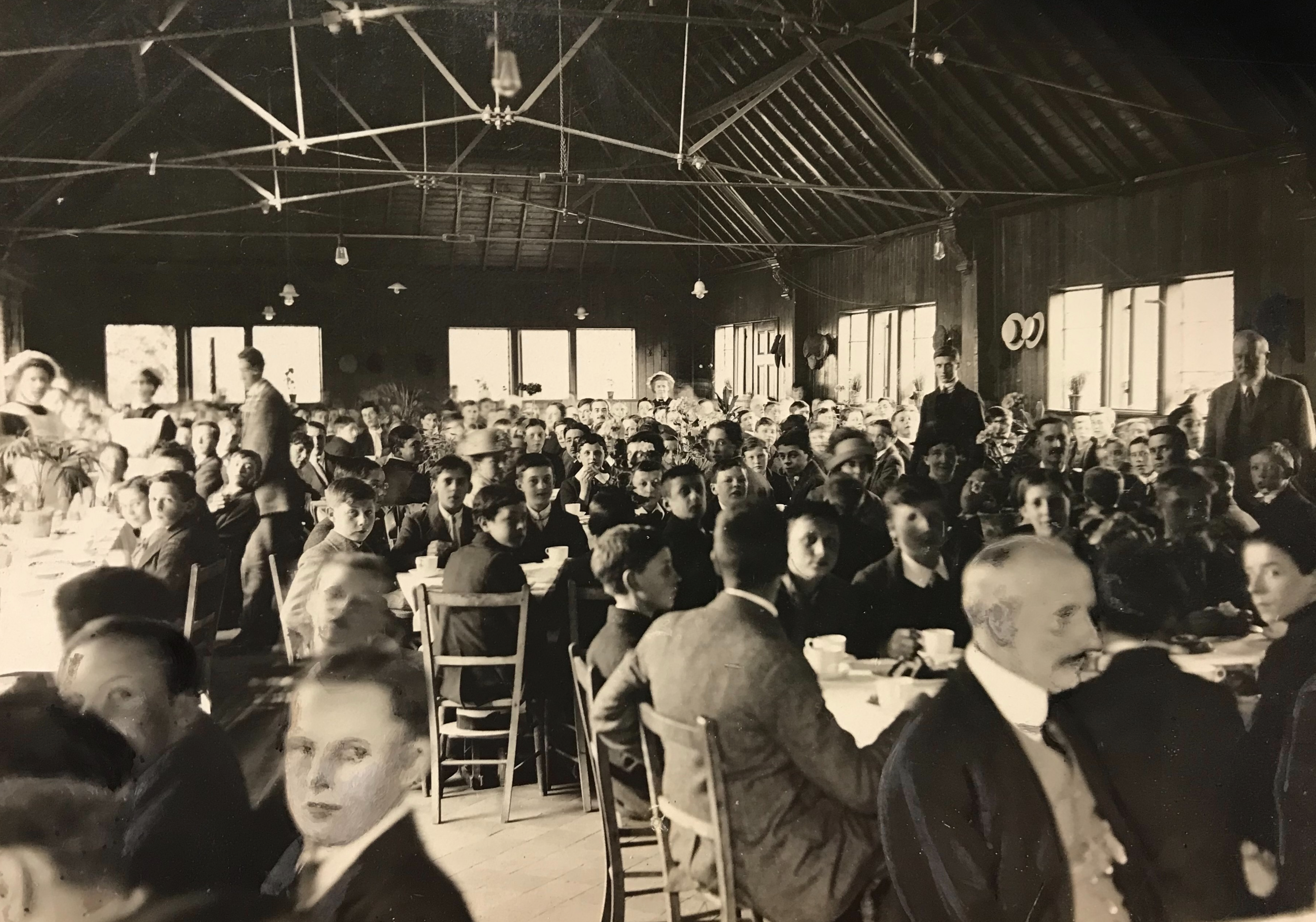 orge and Elizabeth liked to attend the parties to make a welcoming speech or just watch the fun. It is said that George Cadbury’s feelings about the children at his parties could be summed up by the phrase: - “There could never be too many and they could never be noisy enough” (Beauchampe & Inglis 2006). During the war years, the parties were scaled-down but resumed after 1945, with around twenty to thirty thousand people visiting the Manor Farm each summer. Despite her advancing years Elizabeth Cadbury still liked to visit the parties to welcome the visitors or just chat with the children (Scott 1955). In 1951, after Dame Elizabeth Cadbury died, the farm was given to Birmingham City Council for use as a park, opening to the public in 1955. The Barn continued to be used for park visitors and groups until it became a storage facility for the Parks and Nature Conservation Servic
Josephine Adams