Friends Ambulance Unit
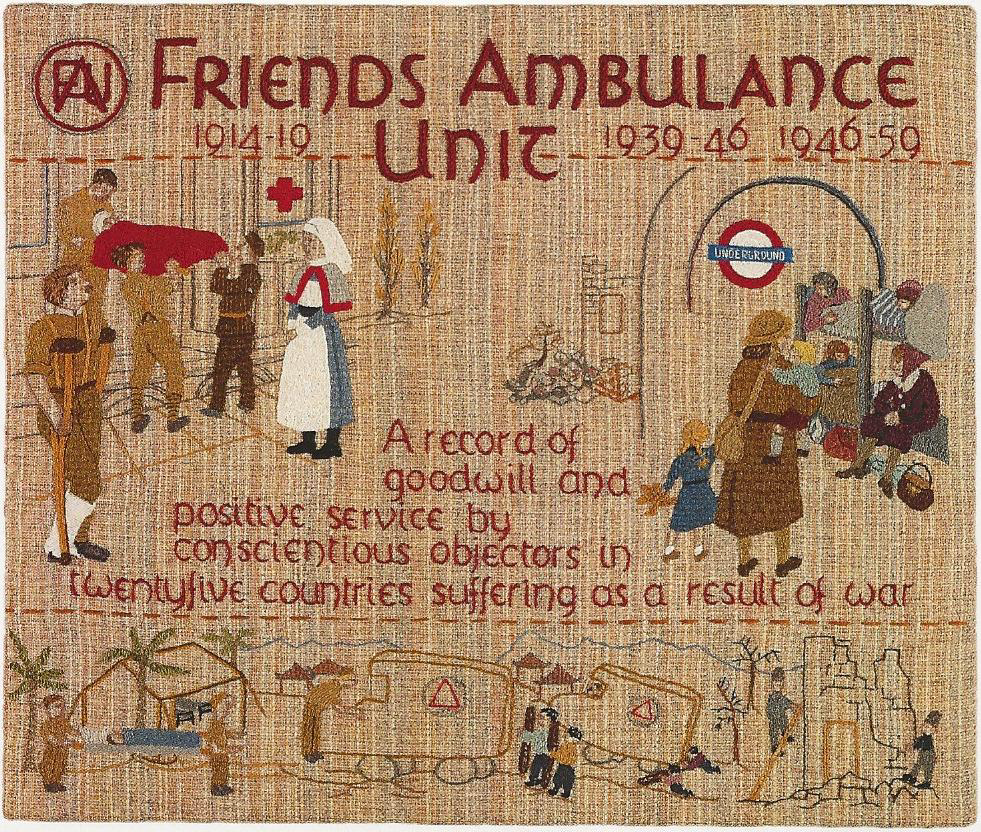
In September 1939, the use of the Barn changed as the spectre of the 2nd World War became reality. The Barn and some of the adjacent farm buildings became the training camp for the Friends Ambulance Unit (FAU). This unit had originally been formed during the 1st World War in 1914 when a group of Quakers decided that, although their religious beliefs prevented them from fighting, they wanted to make their contribution to the war effort and offered their services alongside the troops, alleviating the suffering that the war caused. Amongst these Quakers was Elizabeth Cadbury’s son Laurence, who joined an early training camp in Buckinghamshire where the Unit was form.
The Unit was disbanded in 1919 but when the 2nd World War broke out it was re-formed. The initial stimulus for this was during a family holiday in Anglesey when two families, the Cadburys and the Rowntrees, rivals in business but happy to share holidays, met up. Arnold Rowntree felt, that in view of the worsening political situation, the Unit should be revived and suggested that Paul Cadbury, who had served in the 1st World War should instigate it. Paul, supported by his wife, Rachel were determined that Conscientious Objectors should have the same opportunity to do humanitarian work within Unit as they had had in the 1st World War. Two or three days after war had broken out, Paul and Arnold Rowntrees’ son Michael met at the Cadbury factory. Initially, Michael described ‘how he felt like a spy in a rival company’, but this was soon forgotten when they started to sort through the applications that had already begun to arrive (Smith, 1998 3-5).
Invitation for interview with the FAU, 1941
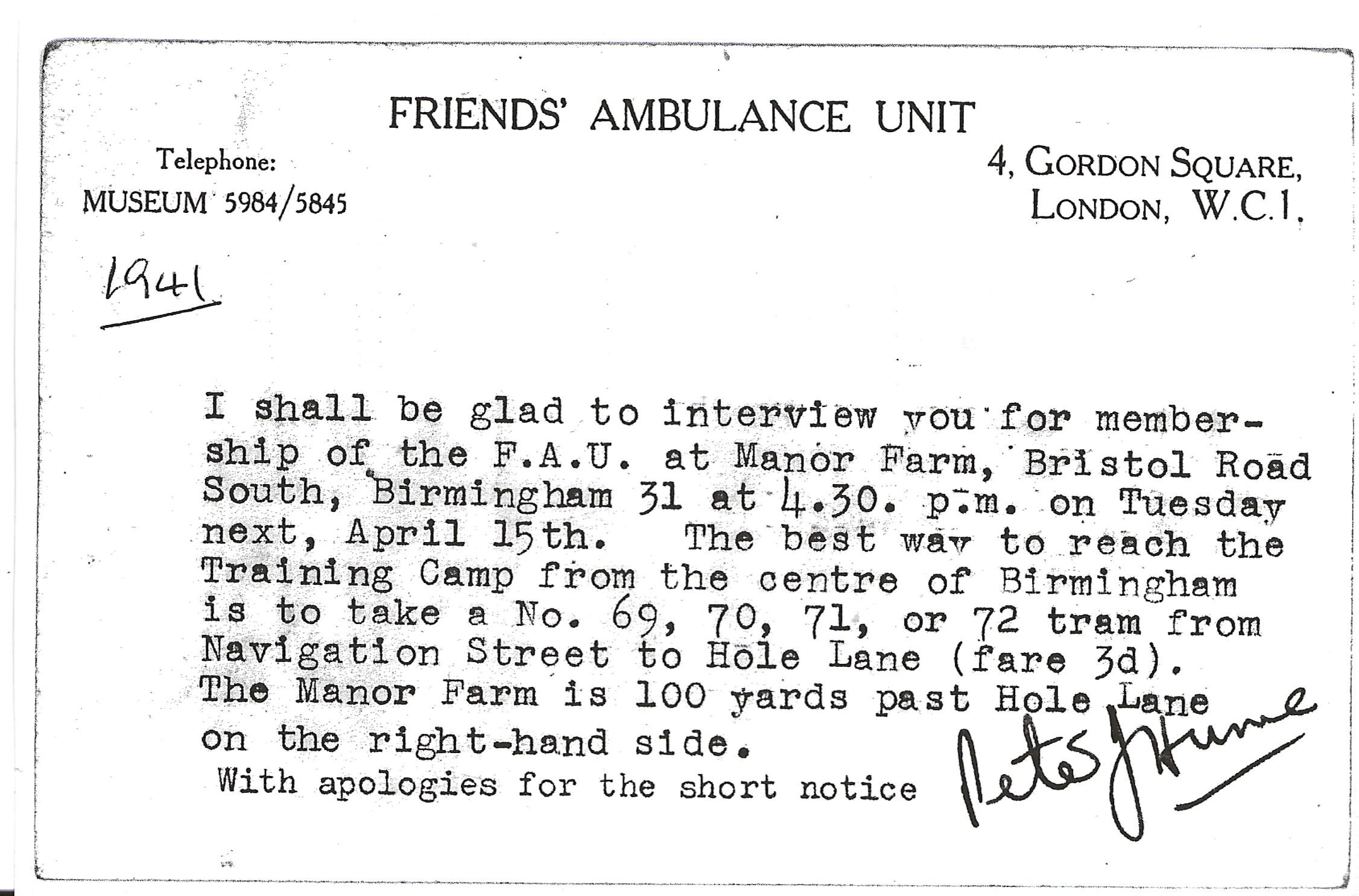 Things moved on quickly then and Paul appealed to his Great Aunt, Elizabeth Cadbury, who donated the Barn at Manor Farm for use as a training camp.The farm buildings were cleaned and altered to provide living accommodation and the Barn itself was used for the training. The fields, woods and large lake made it ideal for field training. During the course of the war over 1000 men were trained there undertaking 6 week courses before being transferred all over the world (Smith, 1998, 1).
FAU Training camp at the Barn 1941 (Courtesy of Nina Downes nee Ridgely)
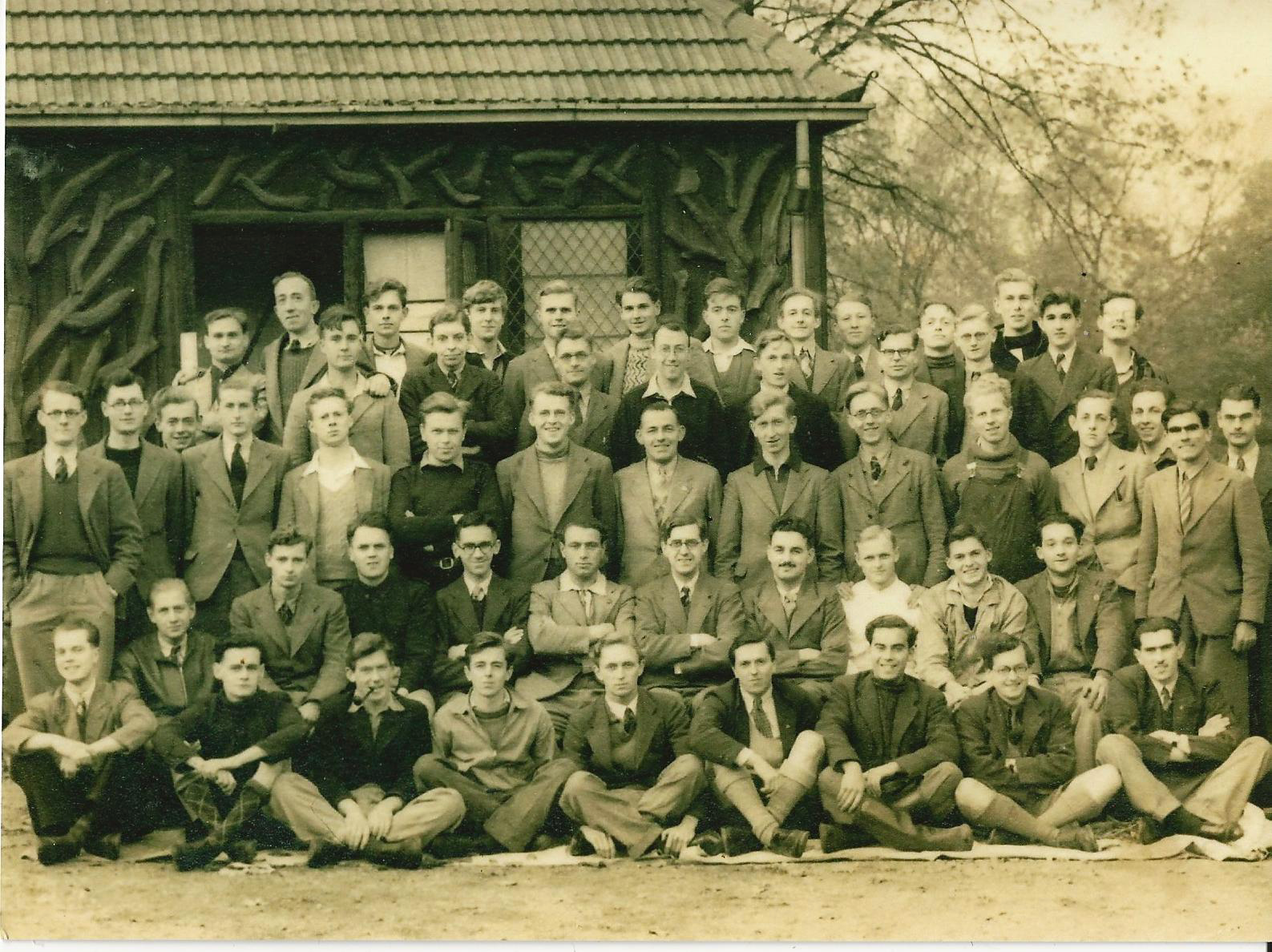 Many written and a few oral testimonies remain of the FAU training at the Barn. The majority of them are favourable, with happy memories of the friendship and camaraderie that developed. At this time of intense patriotism, the Conscientious Objector was often shunned or badly treated, but here they found support and respect amongst others who shared the same philosophy. On a lighter note they recounted how local people, including some Cadbury members took them into their homes on occasions for hot baths and coffee or a good meal (Smith 1998, 33).
After the war the Barn was still used for a while as the FAU adapted to changing circumstances and became the Friends Ambulance Service/Post War Services which carried on until conscription ended (Smith 1998, 363).
 FAU/PWS at the Barn 1946, Smith, L Pacifists in Action.
Another demonstration of the kindness of Elizabeth Cadbury occurred just after the war when a member of the FAU who had trained at the Barn and lived locally, came home from the war with his new bride. They had nowhere to live but on hearing of his plight, she allowed the young couple to stay in the farm buildings next to the Barn until they could find something else. They were in the two storey building on the second floor just with a pile of mattresses and the gas in the kitchen was still on to cook with. They thought it very romantic.
Josephine Adams 2020.
Return to menu
Back to top of page
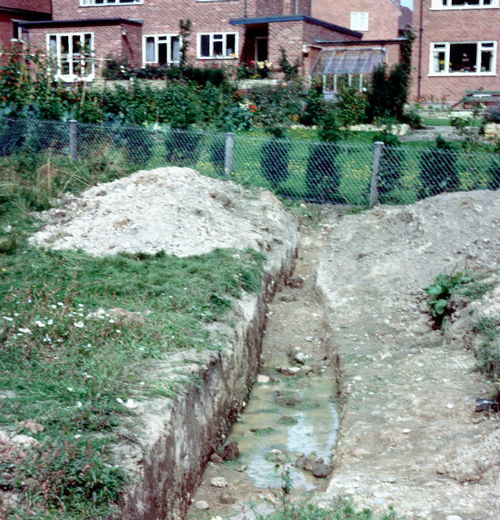 Historians knew there was a Roman road linking Droitwich with Sutton and the North sometime around the AD 40s but its exact course was unknown. In between these two places lay the fort at Metchley, which is now in the grounds of the QE hospital and the Medical School on Vincent Drive in Edgbaston so it is likely to have passed somewhere near to the park.