Desilting the Lake 2020
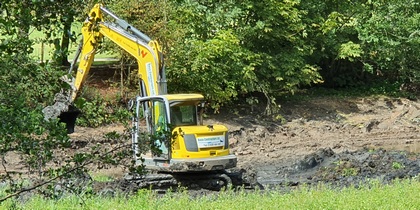 It was impossible to miss the busy machine-work in and around the lake during the past year; many park users were asking what was happening and why.
To date, the Parks Department's contractors have replaced the penstock [sluice gate] in order to drain the lake; removed some of the silt, and with the help of our volunteers, repaired parts of the banks and islands. Having done as much as they could in the lake, the penstock was closed and the lake was allowed to refill.
The silt deposits in the park will begin to reduce as the weather becomes warmer and drier. Hopefully, by late spring/early summer the Council will be able to remove the fencing, level out the area, and reseed to restore the grass.
Although most of the fish were removed, certainly the larger species, it was not possible to remove them all. The Council is looking at ways to restock the fish in the lake but it has to be done carefully to avoid disease and not to introduce species unsuitable for the conditions. Read more here.
Unlike in 1985, when the Council dredged the lake without any warning to park users and local residents, this time it has worked closely with the Friends of Manor Farm Park who had been lobbying for over a decade to have the silt and sand, accumulated over 35 years, removed from the lake. It severely reduced the water holding capacity, thus affecting the natural balance of the lake and its ability to support a rich diversity of wildlife. Click here to view the plan for the 1985 dredging.
The water was so shallow that waterfowl were paddling in many areas; the banks had been badly affected in places by erosion and the islands had become badly overgrown by trees and invasive vegetation making it hard for birds to nest in safety from predators. One was eroded and risked collapsing altogether. Although the streams have been regularly maintained by the Waterside Care Group, volunteers alone could not tackle the silt and mud that had accumulated in the lake.
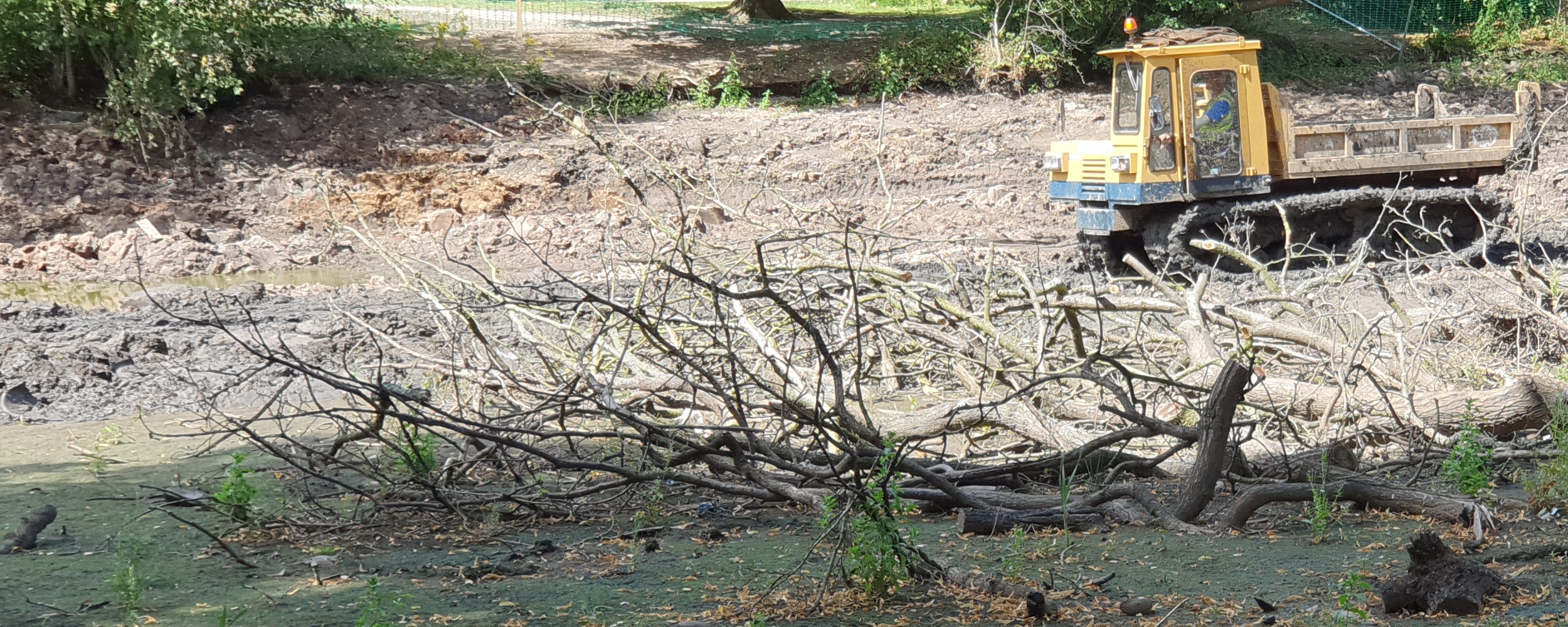
Fortunately, the Parks Department identified funding in 2019/20 and work started in February 2020. The first task was to open the ‘penstock’ to the right of the weir to empty the lake, however, it was stuck fast and had to be replaced. Next, a fishery removed the larger fish; we hope they will be replaced from another source once the lake has been refilled and had a chance to rebalance. As the lake emptied much mud and rubbish including a bicycle, shopping trolleys, shoes and clothing emerged. An unexpected discovery was the large number of freshwater mussels exposed, read more about Freshwater Mussels; they are not a protected species and sadly many perished but many remained below water and are expected to recolonize in due course. 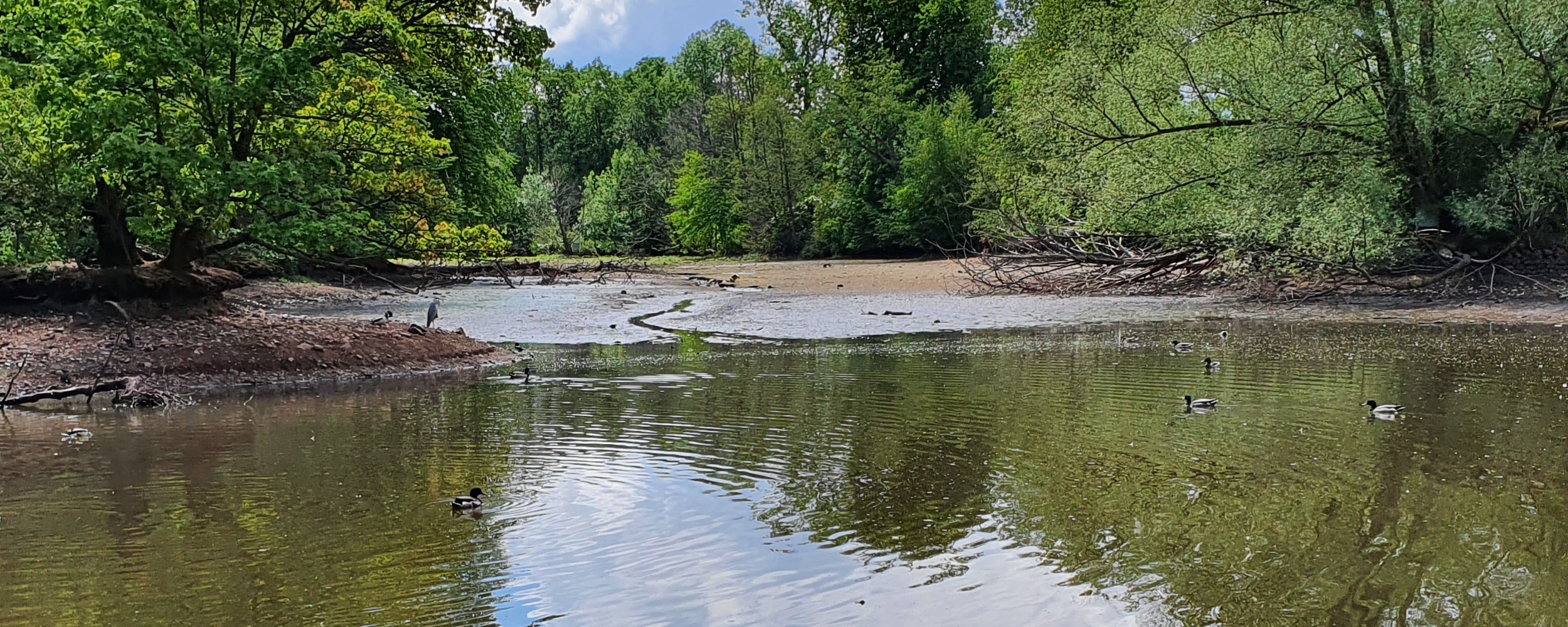
The contractors created a large area at the base of the grassy slope and spread the mud and silt to dry out. Once dried, sometime in 2021, it will be landscaped and reseeded, including with wildflowers and will be suitable for sledding Some of the nutritious mud has also been laid amongst the trees on the East side of the lake. There was not enough money to allow the whole lake to be dredged, but attention has been paid to key areas, including using rocks to reinforce the two largest islands and the duck-feeding area by the main path from the entrance.
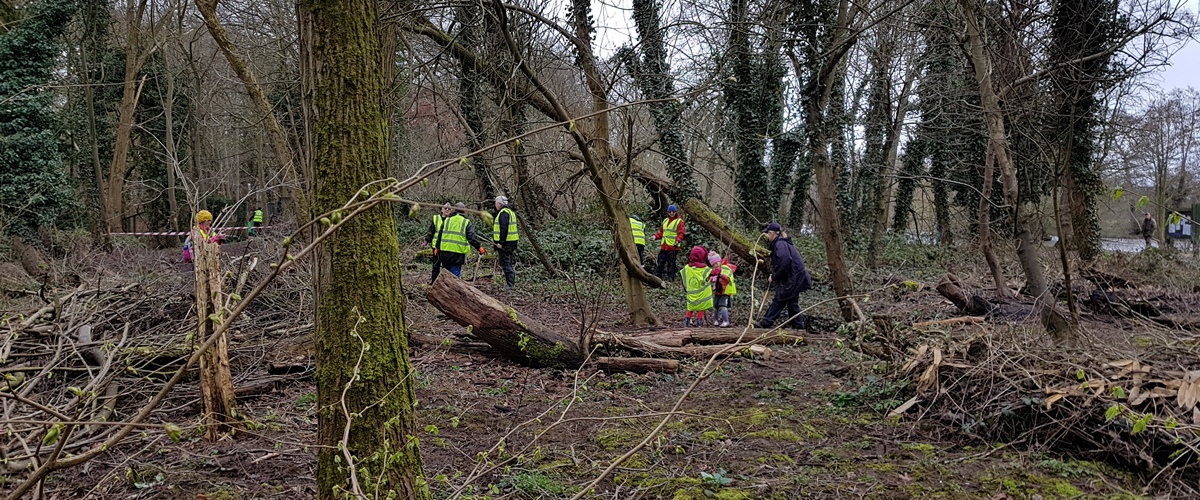
A number of unhealthy, overcrowded, and dangerous trees have been felled as part of the work, some have been left in the lake to help stabilize the bank erosion and form the basis of naturally growing wildlife refuge islands in the future. Others remain in the woods to create natural habitats for wildlife and fungi.
The work was completed during October 2020, the penstock closed and the lake refilled naturally from rainwater. It has been a long process and rather diminished the attractiveness of the park, but 2020 has been a strange year in many ways!
We look forward to a better-quality lake for wildlife, an improved habitat with increased biodiversity, and a better managed natural environment. There will be improved access for the public and a more positive visitor experience.
You can help maintain the lake in good quality for many years by putting your rubbish in bins or take it home, don’t let your dog play in the lake, and don’t feed bread to the wildfowl as this contributes to the deterioration of the water and provides little nutrition. Instead use cornflakes, grapes (cut in half to prevent choking), cracked corn, barley, oats, birdseed, or other grains, peas, or duck feed pellets.
Thank you.