Freshwater Mussels found in the lake
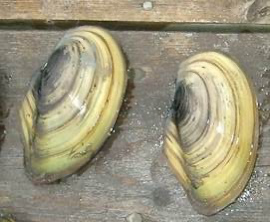
During the dredging of the Lake in 2020, we saw lots of large shells on the newly exposed banks. These were Swan Mussels, a common species of UK freshwater molluscs and are not endangered and will tolerate Eutrophic pools (Nutrient-rich pools). Freshwater Pearl Mussels are only found in clean fast-flowing streams are extremely rare and only occur where there are Salmonids present as they need their gills for part of their lifecycle.
Swan mussels in the silt of the pool are difficult to keep over from pools where dredging work is being carried out and do not take well to transfer (they can create toxic pools when moved to another location).
The scientific name for the Swan mussel is Anodonta cygnea. It is a large species of freshwater mussel, an aquatic bivalve mollusc in the family Unionidae, the river mussels. The shell is thin but large (approximately 10 to 20 cm) and rather flat, even at the umbo. The shell colour is often pale greenish or brownish. It differs from Anodonta anatina in being larger shell with straighter, more parallel dorsal and ventral margins; the growth lines of the inner, oldest part of the shell are finer and shallower and reach the margin
This species is found in rivers and lakes. They have a strong pungent odour and are used by carp fisherman as bait. It is a comon species across Europe.